.png)
Ringing Still
- Robin Lunn

- Jul 2
- 4 min read
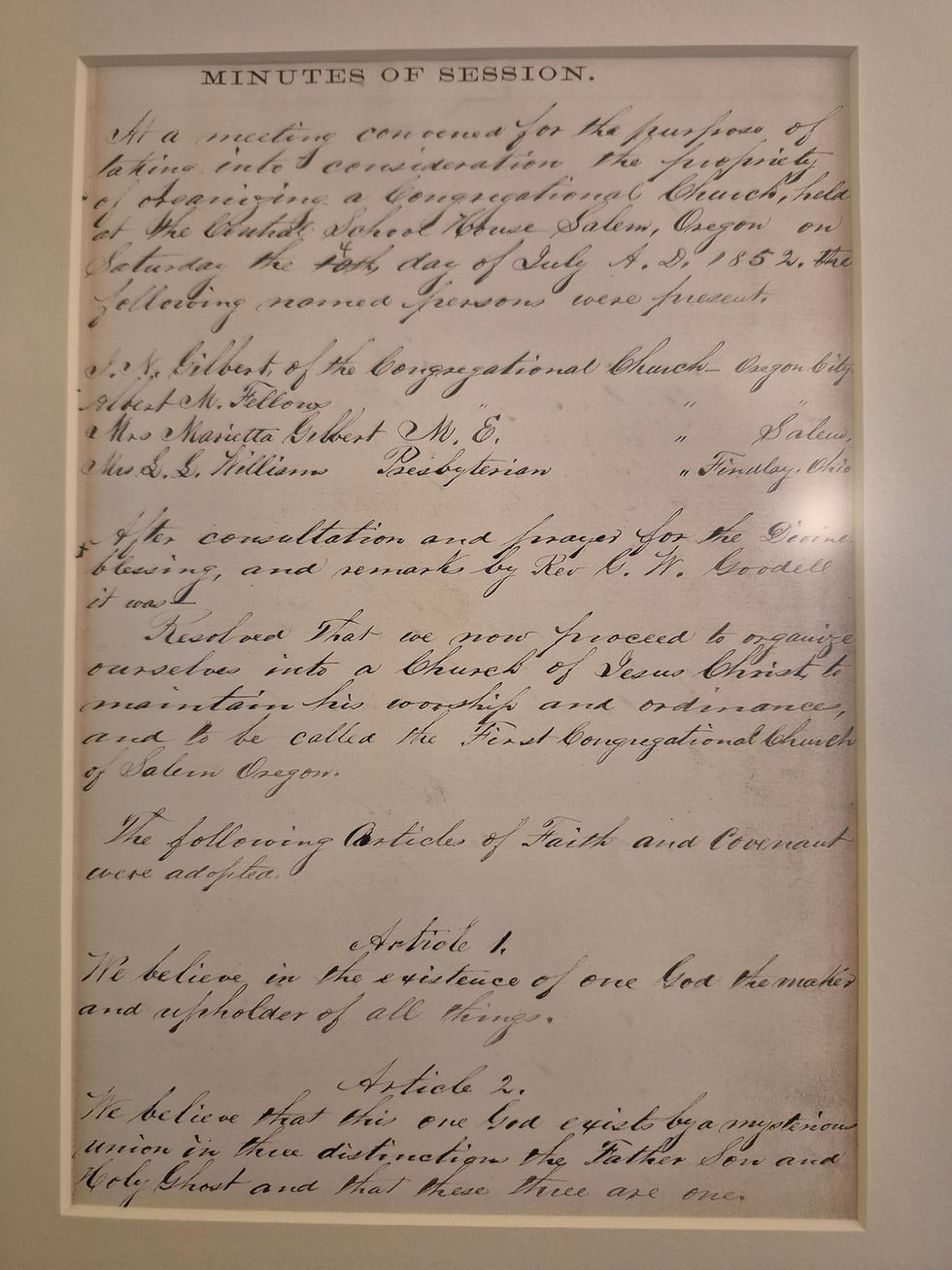
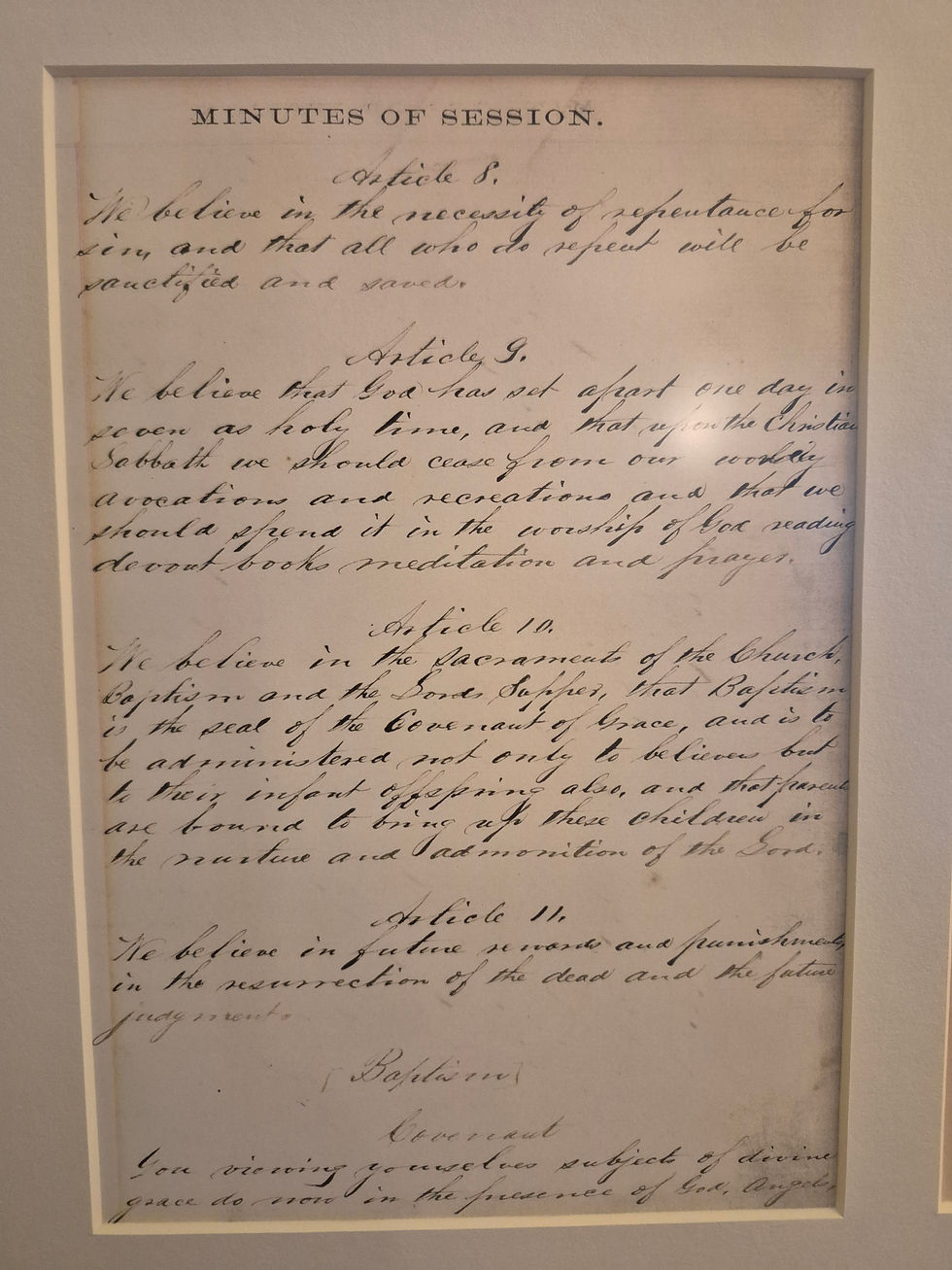
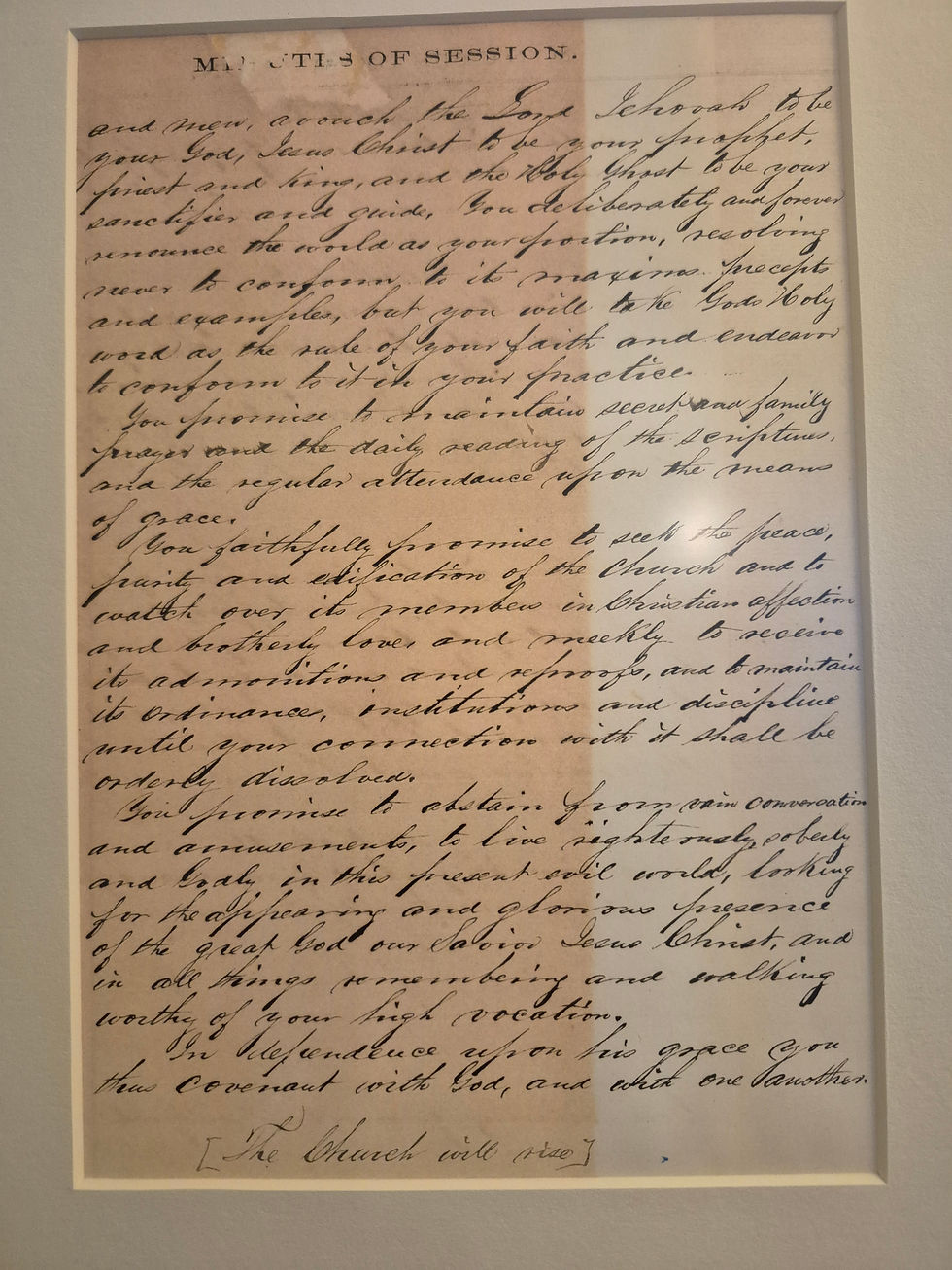
174 years ago this Saturday — July 4, 1852, the 76th anniversary of the Declaration of Independence, years before Oregon was a state — four adults and two children gathered at a schoolhouse in Salem to organize a new congregation. Rev. C. W. Goodell, a Congregationalist pastor from Oregon City, led them in adopting Articles of Faith and a Covenant, and they resolved to organize themselves as "the First Congregational Church of Salem, Oregon." They were Presbyterians, Methodists, and Congregationalists — different traditions, one gathering, and the second-oldest congregation in Salem. The Covenant they signed that day included a promise to "watch over its members in Christian affection and brotherly love." It didn't take long to find out what that would actually cost.
I keep coming back to how ordinary the trouble was. Nobody set out to make this church a battleground. In 1861, Elizabeth Walker Johnson came forward to join, alongside Robin and Polly Holmes — three Black members asking to be received into a fellowship that had, on paper, no reason to say no. And a deacon's wife asked, perhaps quietly, if they could just be admitted on a different day. Not out of malice, probably. But rather, out of a wish to keep the peace, to not make anyone at that merchant family's pew uncomfortable. Rev. Dickinson said no. One service, one vote, everybody welcomed the same way, or nobody was.
That's such a small moment to have begun so much strife. But it's the moment that tells you what kind of church this was going to keep having to choose to be. Two years later, Elizabeth's husband William hosted the wedding of Richard Bogle and America Waldo in their own home — on the same New Year's Day the Emancipation Proclamation took effect. A number of prominent white Salem families showed up to celebrate. Others wrote to the newspapers, scandalized, and the story eventually reached Portland and San Francisco. William Johnson, a Black painter who'd built a life and a home and a business in a place that had passed laws to keep him out, was attacked by name in the press. The papers predicted Dickinson would be forced from his own pulpit. He held on another four years and then, worn down, he resigned.
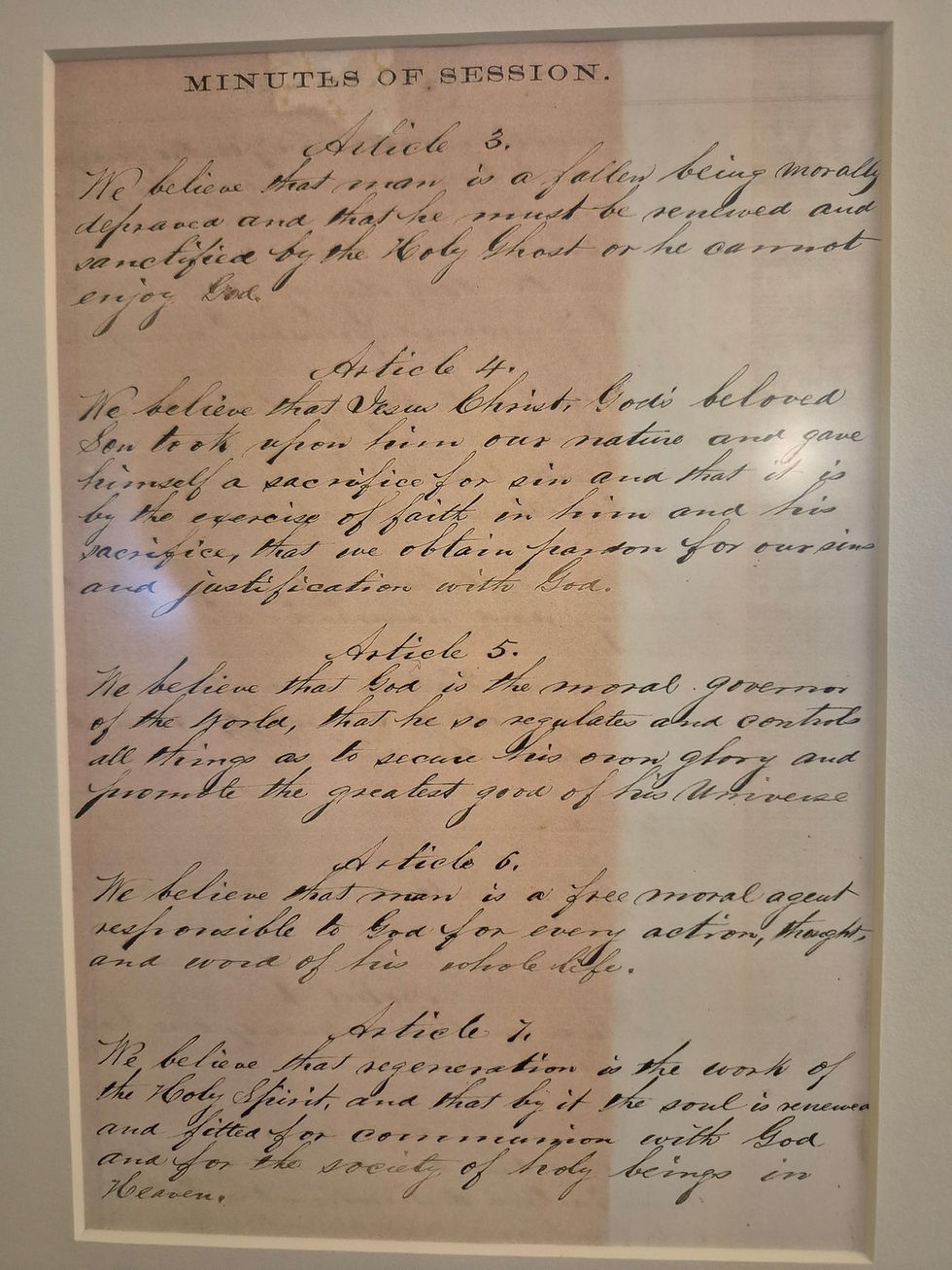
None of that is tidy. I don't think it's supposed to be. What I keep noticing is that the ideals this church wrote down on day one — welcome, equality, the whole Covenant centered around watching over each other "in Christian affection" — were never something this congregation simply said. They were something people here kept having to decide if they were going to live, over and over, usually at real cost, usually in ways that made somebody uncomfortable. Charlotte Dickinson teaching Black children to read in her own small home wasn't a program. It was a woman deciding, evening after evening, that this was worth the cost to her family's standing in town.
That's the thread I want to pull on this week. The Resilience Hub isn't a new idea for this church — it's just the new way of naming something we've been doing since Charlotte's cabin. We were a warming shelter for years before "resilience hub" was a phrase anyone used. We supported refugees before Salem had an organization built for it. We showed up early for the LGBTIA+ community, for immigrants, for people other churches wouldn't sit with. None of that started because it was easy or expected. It started because somebody here decided it mattered, the same way Charlotte decided it mattered, one evening at a time, in a room the rest of the town didn't approve of.
So, what does it mean to ring a bell 13 times this Saturday, in the middle of a country's complicated 250th birthday, a birthday that means wildly different things depending on who you ask and what your family's history here has been? I don't think the honest answer is triumph. I don't think it's shame either. I think it's closer to what the bell is actually for: not a proclamation that we've arrived, but a call back — back to this room, this moment, this specific, unfinished work.
There's a version of that thought in "Franklin's Tower," a Grateful Dead song our administrator Lily Walker pointed me to, built around Robert Hunter's refrain "roll away the dew." Hunter imagines a bell that might have only "one good ring" left in it: "God save the child who rings that bell / it may have one good ring, baby, you can't tell." I don't think the song is really asking how many good rings are left. I think it's asking whether you ring it anyway. Whether the not-knowing is a reason to stay quiet or a reason to make the sound while you can.
Our bell is the oldest artifact this church has. It's outlasted three buildings — carried, literally, from church to church to the church. Countless hands have rung it, and it's invited countless people, over those 174 years, into something more than themselves: a room bigger than whatever they were carrying. It has never cracked. I don't take that as evidence we've done better than anyone else. I take it as a responsibility — a bell that's still whole is a bell that still has to be rung, on purpose, by somebody, or it's just decoration.
This Saturday, as part of the national observance of America's 250th anniversary, we will ring the bell 13 times. Next year, I hope we can ring it 175 times, on our anniversary, to say: we are here, we are still living into the ideals of our founders, and we are still seeking to be a place where all are welcomed, where resilience is centered, and where justice is served.
May we ring out for years to come!
Pastor Robin


Comments