.png)
Resilience at Our Core
- Robin Lunn

- Jul 9
- 4 min read
In the early days after the towers came down, I served as a chaplain in Lower Manhattan, with the first responders, the recovery crews, the people allowed into the zone to work on the "pile."
St. Paul's Chapel sat directly across from where the World Trade Center had stood and came through the collapse without real damage, a small eighteenth-century church at the center of the worst thing the city had ever seen. And it became a refuge, open around the clock. Workers came up off the pile — exhausted, boots half-melted from the heat still burning underground — and found a hot meal, a pew to sleep in, care for their ruined feet, someone to sit with them, prayer.

I was there for the people doing that unbearable work, and I watched a small church become the place where a battered community could be human again. I didn't really have a word then for what that church was doing. I do now. That word is resilience.
Today, resilience has become a fashionable word. It's means different things in different situations. I want to talk about three.
First, for people. Resilience is the capacity to experience a loss, hardship, or shock and not come apart: to go through something hard and keep growing. What lets a person bend rather than break is almost always the web around them; relationships, trust, and people who show up. This is social resilience, and you can't stockpile it. You build it slowly, before the crisis, by being in real relationship with each other.
Then there's a "resilience hub." Communities across the country are turning trusted, well-used spaces — churches, schools, community centers — into places that provide resources before, during, and after disasters. Many have solar power and battery backup systems for when the grid fails. Some have food programs, weather relief programs, and medical support for disasters. The best run year-round as places of gathering, because the trust built in ordinary times is what a community reaches for when hard times come.
Then there's the meaning that matters most to me. Spiritually, resilience is not grit and not self-sufficiency. It's rootedness - the difference between being tough and isolated and being resilient because you are connected to something deeper than yourself. For us, that rootedness has a very old instruction: to act justly, to love mercy, and to walk humbly with your God. It is not comfortable. It is the strength to keep doing the right and costly thing, together, for a very long time, and to still be standing, still bending toward justice, generations on.
That is the resilience at our core. Not just food storage in the basement, but a community that has practiced showing up for each other long enough that showing up is simply who we are.
Churches everywhere are making a version of this shift because we already have the things a hub needs: trusted space, and (hopefully) communities people have reason to trust. We're part of it, but we're taking it somewhere specific, somewhere connected to the core of who we are.
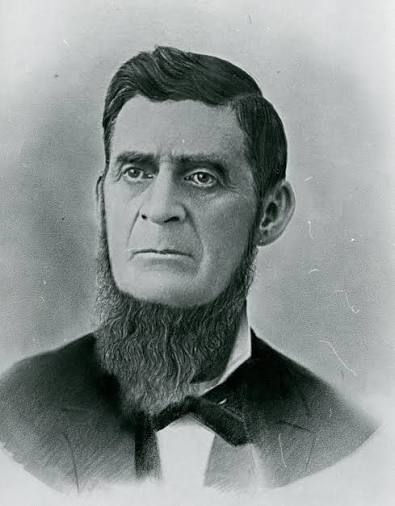
From early on, our first pastor, Obed Dickinson, admitted Black members to this congregation, at great personal cost, against the wishes of his most prominent parishioners. Over the years, this congregation stood with women's suffrage, with Civil Rights, with refugee and immigrant rights. In 1992 we became the first Open and Affirming congregation in Salem, when that was not safe. We've hosted Confluence LGBT Chorus, PFLAG, and Rainbow Youth. We have several 12-Step groups weekly using our building. We were one of the first churches in Oregon to put solar panels on our roof, hosted a warming shelter, built Habitat homes, helped to found Congregations Helping People and Salem Hospitality Network. And for years, during legislative sessions, housing advocates, climate organizers, LGBTQIA+ groups, human rights advocates, and immigration coalitions have gathered in our building, a few blocks from the Capitol, because they knew they were welcome.
And for almost twenty-five years we were home to CAUSA, one of Oregon's leading immigration rights organizations. When it closed, the empty space asked me a question - not just what we can do with those rooms, but what is this whole building for. I've carried that question with you for over two and a half years. The choice to be a justice-rooted resilience hub is our answer. That choice is not simply about having a tenant upstairs or lobby days in the spring. It is about being a place where everyone helps to Obed's dream of justice and welcome alive in such a time as this. Our stone church is simply its current home.
So, when we say we're becoming a resilience hub, we aren't following a trend, we're naming something we have always been: infrastructure for the work this congregation has always been called to support — housing, climate, immigration, racial equity, LGBTQIA+ dignity, human rights. We are claiming our identity as a collective space for the people and organizations doing this together in Oregon.
And while most resilience hubs organize around a hazard, ours organizes around a commitment — one we trace back to a pastor refusing to turn people away, and to the old question in Micah about what the Lord requires of us. For me, this lives in one word: collective. Not one institution running a program for everyone else, but many organizations building and sharing one home — not rental relationships, but a shared community working toward common values.
When I think back to Lower Manhattan, I hope the equipment operators searching for remains knew they were part of something larger than themselves — that they were not alone. I know the hard pews became places of peace regardless of anyone's faith, and that the prayers shared there reminded us we are more than the worst day of our lives. And I believe the resilience we are building here will let us stand together through the hard days ahead — not because we are tough, but because we are rooted in each other, and in something deeper than ourselves.
May the fruits of the spirit be visible in us as we build our resilience together, as a congregation and a community.
Pastor Robin


Comments